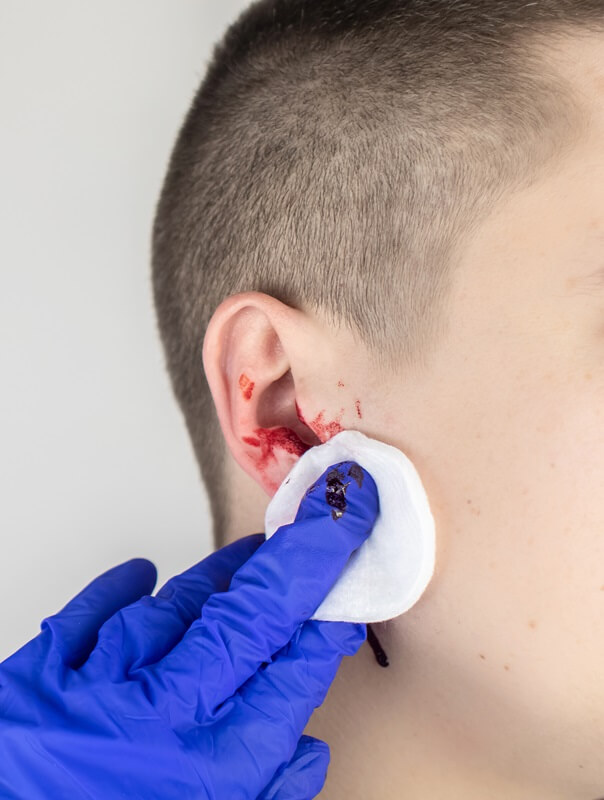
Finding blood coming from your ear can be an alarming experience. Consequently, it often triggers immediate concern. While it can sometimes result from a minor scratch, bleeding from the ear can also signal a more serious underlying issue that needs prompt medical attention.
Therefore, understanding the potential causes is the first step toward getting the right care. This guide will walk you through the common reasons for ear bleeding, the symptoms to watch for, and the crucial steps you should take next.
Why Is My Ear Bleeding? Common Causes Explained
Bleeding from the ear can happen for several reasons, ranging from simple injuries to more complex infections.
- Scratches or Trauma: First and foremost, a common cause is minor injury. Cleaning your ear too aggressively with a cotton swab, a fingernail, or another object can easily scratch the delicate skin inside the ear canal. Similarly, a direct blow to the ear or head during a fall or accident can cause bleeding.
- A Ruptured Eardrum: An eardrum can tear or perforate due to sudden, loud noises, severe head trauma, or rapid pressure changes (known as barotrauma). Barotrauma often happens during air travel or scuba diving. In addition to bleeding, you might feel sudden, sharp pain.
- Ear Infections: Infections are another major culprit.
- Middle Ear Infection (Otitis Media): When fluid builds up behind the eardrum from an infection, the pressure can cause the eardrum to burst, leading to a discharge of blood and pus.
- Swimmer’s Ear (Otitis Externa): This is an infection of the outer ear canal. A severe infection can cause the skin to become so inflamed and irritated that it begins to bleed.
- Foreign Objects in the Ear: This is especially common in children. Inserting small objects like beads, toys, or even food into the ear can injure the ear canal and cause it to bleed.
- Tumors or Polyps: Although less common, non-cancerous (benign) or cancerous (malignant) growths in the ear canal can sometimes cause bleeding. Therefore, persistent or unexplained bleeding should always be evaluated by a professional.
Symptoms That Can Accompany Bleeding from the Ear
Bleeding is often just one piece of the puzzle. Other symptoms can provide important clues about the cause. For instance, you may also experience:
- Ear pain, which can range from a dull ache to sharp and severe.
- A feeling of fullness or pressure inside the ear.
- Muffled hearing or significant hearing loss.
- Ringing in the ear (tinnitus).
- Dizziness or a feeling of spinning (vertigo).
- Fever, which typically points to an infection.
- Fluid or pus draining from the ear along with blood.
When You Absolutely Must See a Doctor
While a tiny amount of blood from a minor scratch might resolve on its own, you should seek immediate medical attention in certain situations. Go to a doctor or an urgent care center if:
- The bleeding was caused by a head injury.
- The bleeding is heavy or doesn’t stop.
- You are experiencing severe pain, dizziness, or a headache.
- You have a high fever.
- You have suddenly lost your hearing.
In short, it’s always better to be safe. When in doubt, get it checked out by a healthcare professional.
(Suggested External Link: Add a link to a reputable health source like the Mayo Clinic or NHS page on eardrum rupture for more in-depth medical information.)
How Is Bleeding from the Ear Treated?
Treatment depends entirely on the underlying cause. After a thorough examination, a doctor might recommend one of the following approaches:
- For Minor Cuts: The doctor may simply clean the area and advise you to keep it dry.
- For Infections: Treatment usually involves antibiotic ear drops or oral antibiotics to clear the infection. Subsequently, the bleeding and other symptoms should resolve.
- For a Ruptured Eardrum: Most ruptured eardrums heal on their own within a few weeks. A doctor will advise you to keep the ear dry and may prescribe antibiotics to prevent infection. According to experts at the Mayo Clinic, if the tear doesn’t heal on its own, a minor surgical procedure might be needed.
- For Foreign Objects: A doctor has the right tools to safely remove a foreign object without causing further damage. Never try to remove a lodged object yourself.
A Simple Guide to Preventing Ear Bleeding
Finally, you can take steps to protect your ears and reduce your risk.
- Stop putting objects in your ears. This is the most important rule. Cotton swabs can push wax deeper and easily injure the ear canal or eardrum.
- Keep your ears dry. After swimming or showering, gently dry the outside of your ears. If you’re prone to swimmer’s ear, consider using preventative drops.
- Treat colds and allergies promptly. Managing congestion can help prevent the fluid buildup that leads to middle ear infections.
In conclusion, bleeding from the ear is a symptom that should never be ignored. By identifying the cause and seeking timely medical advice, you can prevent complications and ensure a healthy recovery.
read also this: The Ultimate Guide to Curing Agonizing Ear Pain