Introduction
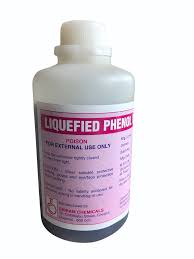
Phenol, also known as carbolic acid, is a highly corrosive chemical widely used in industries and laboratories. Although it has disinfectant and antiseptic properties, phenol is extremely toxic to humans when ingested, inhaled, or absorbed through the skin.
Phenol poisoning remains a significant occupational and accidental hazard, especially in industries where phenolic compounds are used to make resins, plastics, dyes, and disinfectants.
What is Phenol?
Phenol is an aromatic organic compound (C₆H₅OH) with a distinct, medicinal odor. It appears as a colorless to pinkish solid that easily liquefies at room temperature. Despite its usefulness in medicine and manufacturing, phenol is dangerous because it can rapidly penetrate tissues and cause systemic toxicity.
Sources of Phenol Exposure
Phenol poisoning can occur through:
- Accidental ingestion of antiseptics or disinfectants containing phenol (e.g., Lysol, Carbolic acid solutions).
- Occupational exposure in industries manufacturing resins, plastics, dyes, and explosives.
- Laboratory exposure during chemical handling or DNA extraction procedures.
- Medical misuse, such as excessive topical application during antisepsis or chemical cautery.
- Suicidal ingestion, which is unfortunately a recognized cause of fatal poisoning.
How Phenol Causes Toxicity
Phenol acts as both a local corrosive and a systemic poison:
- Locally, it causes coagulative necrosis of tissues, leading to whitening and later blackening of the skin and mucosa.
- Systemically, it is rapidly absorbed and affects the central nervous system, heart, kidneys, and liver, disrupting cellular metabolism and causing multi-organ failure.
Clinical Features of Phenol Poisoning
1 – 2 gm of phenol is sufficient to cause symptoms.
The symptoms depend on the route and amount of exposure.
1. Local Effects
- Immediate burning pain at the contact site.
- White, then brown or black necrotic patches on skin or mucous membranes.
- Corrosive burns in the mouth, oesophagus, and stomach if ingested.
- Greyish discolouration of mouth and oesophageal mucosa if ingested.
2. Systemic Effects
| System | Symptoms |
| CNS | Headache, dizziness, excitement → depression, convulsions, coma |
| Cardiovascular | Hypotension, irregular pulse, circulatory collapse |
| Respiratory | Difficulty breathing, pulmonary edema |
| Renal | Phenoluria (greenish or smoky urine), hematuria, renal failure |
| Gastrointestinal | Nausea, vomiting (dark or bloody), abdominal pain |
| Skin | Painless white patches that later turn brown due to necrosis |
Characteristic Signs
- Odor: Carbolic or medicinal smell from breath or vomitus.
- Urine: Greenish or smoky discoloration due to phenolic metabolites.
- Skin: Painless whitening followed by brownish-black discoloration.
Diagnosis
Diagnosis is primarily clinical, supported by:
- History of exposure (industrial, accidental, or suicidal).
- Characteristic odor and urine discoloration.
- Laboratory findings: Metabolic acidosis, elevated creatinine, hematuria.
- Toxicological analysis: Detection of phenol or its metabolites in blood or urine.
Treatment and Management
Phenol poisoning is a medical emergency requiring immediate care.
1. First Aid
- Remove contaminated clothing immediately.
- Wash affected skin with large amounts of water or polyethylene glycol (PEG 300 or 400) if available (it neutralizes phenol better than water).
- Avoid using alcohol or oils for decontamination, as they enhance absorption.
- Do not induce vomiting if ingested—phenol is corrosive.
2. Hospital Management
- Airway, breathing, and circulation (ABC) support.
- Gastric lavage may be done cautiously with activated charcoal (avoid if there is severe corrosion).
- IV fluids and vasopressors for shock.
- Anticonvulsants for seizures.
- Hemodialysis may be required for renal failure.
- Symptomatic and supportive therapy is the mainstay, as no specific antidote exists.
Prevention
- Proper protective clothing and gloves for workers handling phenol.
- Adequate ventilation in workplaces.
- Labeling and safe storage of phenolic disinfectants.
- Public education about the toxicity of household antiseptics.
Conclusion
Phenol is a useful but dangerous chemical. Its ability to cause rapid tissue damage and systemic poisoning makes phenol exposure a life-threatening emergency. Awareness, industrial safety practices, and prompt medical intervention are essential to prevent and manage phenol poisoning effectively.